
VR perceptual training in ice hockey
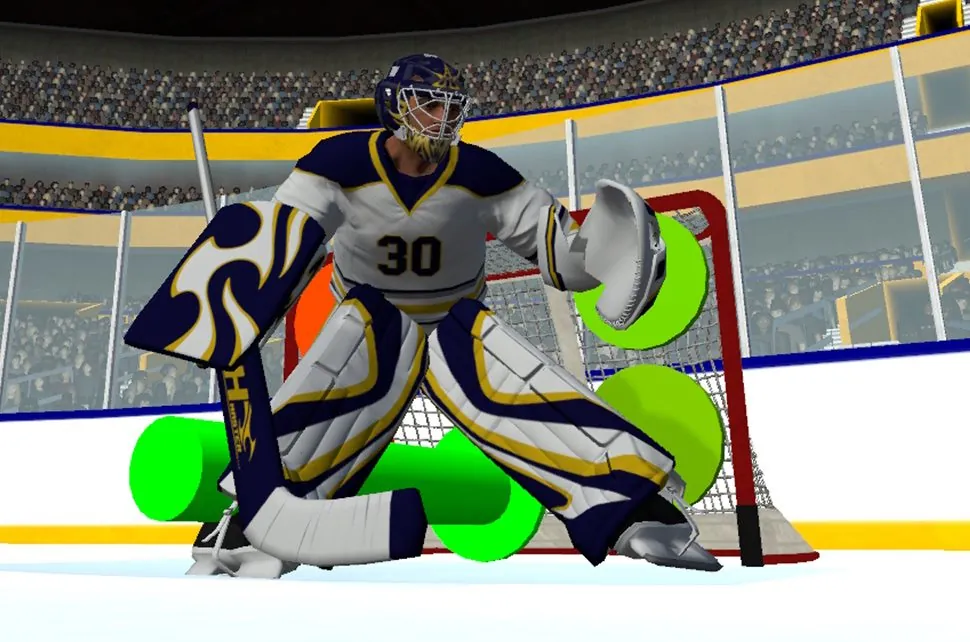
VR training for ice hockey players: learning to see the goal through the eyes of the puck.
+15% perceptual performance after a single 15-minute session
We investigate how humans perceive and control their movements. Based at the Department of Neuroscience and Movement Science of the University of Fribourg, we combine experimental neuroscience, motion analysis and immersive technologies to understand how the brain interacts with the body and the physical world.
A cartwheel recorded in our motion capture room: 18 points of light at the joints of the tracked skeleton, and their trails. That is all the brain needs to see a person. Drag to turn around the body.
How do we know how fast we are moving?
How the brain integrates visual, vestibular and proprioceptive signals into a coherent sense of self-motion. Using psychophysics and virtual reality, we study speed perception, spatial orientation and multisensory integration.
How does the body keep a movement on course when the world pushes back?
How the nervous system plans and adjusts movements under physical constraints and unexpected perturbations. From eye–hand coordination to whole-body balance and locomotion, with 3D kinematics, EMG, kinetics and oculomotor recordings.
Can we train what athletes see, the way we train their muscles?
Immersive training systems that combine human–avatar interaction and machine learning to sharpen perceptual-motor skills in athletes and to support rehabilitation in clinical populations.
VR training for ice hockey players: learning to see the goal through the eyes of the puck.
+15% perceptual performance after a single 15-minute session
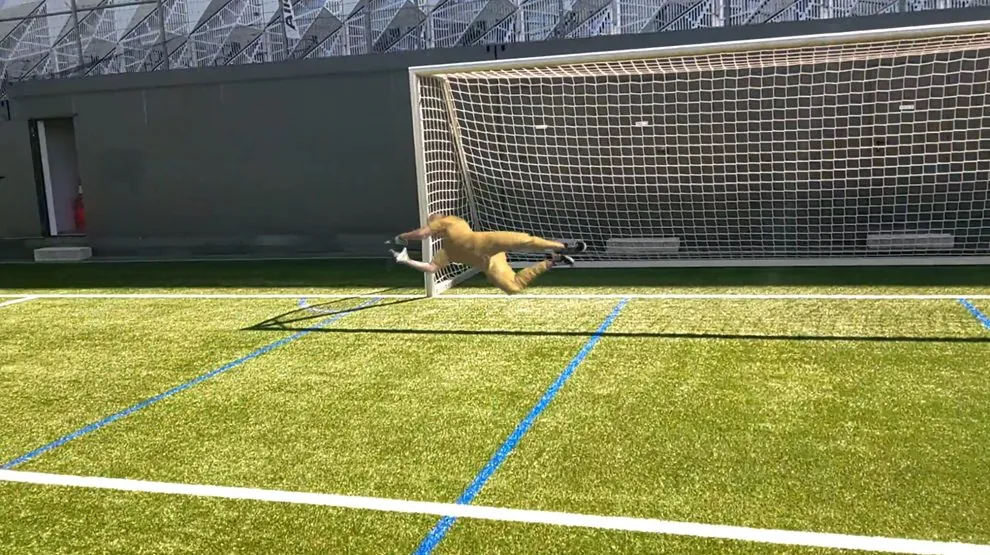
Real balls, real goal, holographic goalkeeper: training players to redirect their kick.
−120 ms redirection threshold after 10 sessions (−28%)
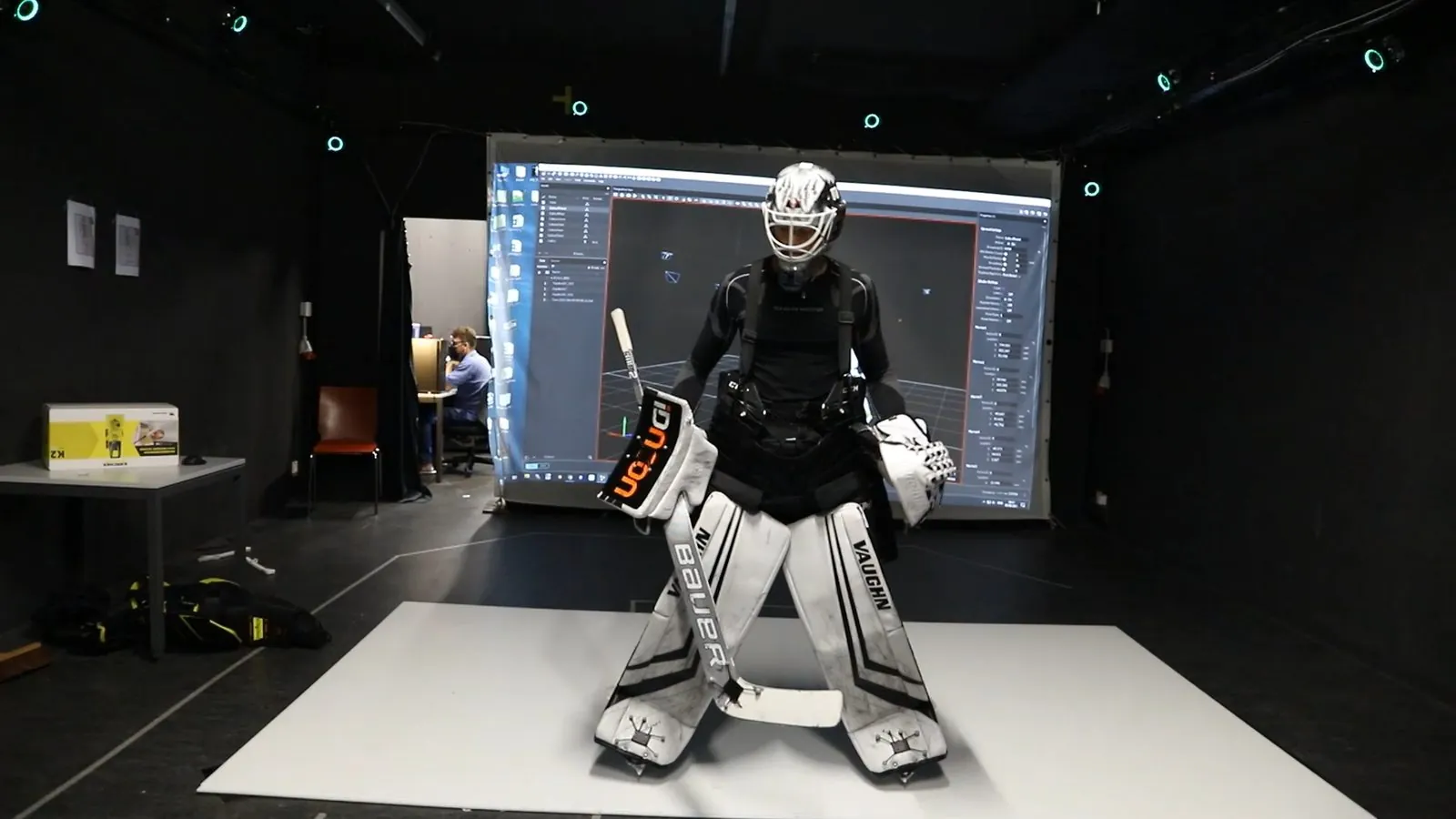
24 OptiTrack cameras watch an 8 × 6 m volume 360 times a second. Around them: a rear-projection screen, a psychophysics set-up with eye tracking, and Pimax, Varjo, HTC Vive and HoloLens headsets.
See the facilitiesOur work has been covered by La Télé, Radio Freiburg, Freiburger Nachrichten, RTS, Unifr News, SwissInfo, Bluewin, MyScience, Tio.ch, La Liberté, ArcInfo, The Economist, SRF and Frapp.
We supervise Master's theses on motion capture, virtual and augmented reality, and perceptual-motor training, often with clubs and athletes. We also welcome research collaborations and requests to use the lab.